
Introduction: What Are Mood Swings?
Mood swings are sudden changes in emotional state that can range from happiness to sadness or irritability within minutes. While mild mood variation is normal, frequent or intense emotional changes can affect your relationships and overall quality of life. Understanding the root causes of mood swings helps restore emotional stability and mental clarity.
🧬 Causes of Mood Swings
There are multiple reasons why people experience emotional fluctuations:
-
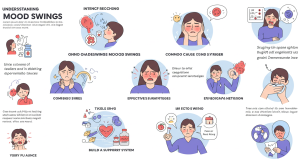
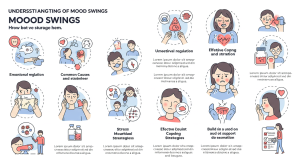
Hormonal changes – Shifts during puberty, menstruation, or menopause can trigger strong emotional responses.
-
Stress and anxiety – Ongoing stress can lead to irritability and loss of emotional control.
-
Lack of sleep – Inadequate rest disrupts serotonin levels and mood regulation.
-
Unbalanced diet – Sugar highs, caffeine, and alcohol can worsen mood instability.
-
Mental health conditions – Disorders such as depression or bipolar disorder often include rapid emotional variation.
When these emotional fluctuations persist without clear reason, professional guidance can help identify the underlying issue.
🌿 How to Manage Mood Swings Naturally
🧘 Practice mindfulness
Meditation builds awareness of thoughts and feelings before they intensify. Regular mindfulness practice reduces stress hormones and balances brain activity related to mood.
💤 Prioritize sleep
Aim for 7–9 hours of consistent rest. Sleep resets emotional control centers and helps prevent irritability.
🍎 Eat for emotional balance
A diet rich in whole grains, omega-3s, and B-vitamins helps maintain serotonin production. Limit processed foods that can trigger sudden mood fluctuation.
🚶 Move your body
Exercise releases endorphins and stabilizes emotions. Even light physical activity, like walking, helps reduce mood instability.
💬 Express your emotions
Talking to friends, family, or a therapist prevents emotional buildup and offers new perspectives.
⚖️ When to Seek Help
Seek professional help if:
-
Emotional highs and lows interfere with daily life
-
You feel hopeless or constantly anxious
-
Sleep and appetite are severely affected
-
There are recurring thoughts of self-harm
A therapist can help identify if mood swings are linked to depression, bipolar disorder, or hormonal imbalance. Early intervention can make management easier.
🌈 Building Emotional Strength
Building resilience helps reduce the frequency of mood swings:
-
Keep a mood journal
-
Practice gratitude
-
Maintain healthy relationships
-
Avoid excessive alcohol and nicotine
Small consistent changes lead to long-term emotional balance.
💭 Conclusion
Mood swings are part of being human, but when managed through mindfulness, rest, and proper nutrition, emotional balance becomes easier to maintain.
Remember — stable emotions come from a steady lifestyle, not perfection.
https://www.nimh.nih.gov/health/topics/stress
https://raum.it.com/10-best-morning-exercises-for-a-healthy-start/


Leave a Reply