


Why Sleep Routine Management Matters
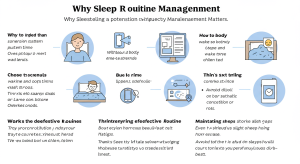
Sleep routine management is not just about going to bed on time; it is about creating a lifestyle that supports long-term health and productivity. A consistent routine trains your body’s internal clock, also known as the circadian rhythm, to follow a steady pattern. Without this rhythm, people often experience fatigue, irritability, poor focus, and even weakened immunity. By practicing healthy sleep routine management, you give your body and mind the opportunity to reset, recover, and perform at their best the next day.
Quality sleep is as important as nutrition and exercise. While many people focus on diet or fitness, they underestimate the role of consistent rest. Sleep allows the brain to process information, repair cells, and regulate hormones. Skipping this essential recovery time can increase risks of chronic stress, anxiety, and even lifestyle diseases such as diabetes and heart problems. This is why sleep routine management is a foundation of a balanced and healthy life.
Daily Habits for Better Sleep Routine Management
The first practical step is to establish a consistent bedtime and wake-up schedule. Going to bed and waking up at the same time—even on weekends—helps train the body to expect rest at certain hours. Over time, this reduces the struggle of falling asleep and makes mornings more refreshing.
In addition, pay attention to pre-sleep habits. Caffeine, alcohol, and heavy meals in the evening can interfere with your natural rhythm, causing restlessness. Instead, choose calm and restorative activities. Meditation, gentle stretching, journaling, or reading a physical book can help calm the mind. Screen time should also be limited. The blue light emitted from phones, tablets, and TVs suppresses melatonin production, delaying the feeling of sleepiness. For this reason, experts recommend turning off screens at least one hour before bed.
Creating the Right Environment for Healthy Sleep
Your environment also plays a crucial role. A healthy sleep environment should be cool, quiet, and dark. Simple changes like blackout curtains, white noise machines, or keeping electronic devices out of the bedroom can transform the quality of your sleep. Even details like clean bedding, comfortable pillows, and good air circulation contribute to better rest. Treat your bedroom as a personal sanctuary designed only for sleep and relaxation, not for work or endless scrolling.
Long-Term Benefits of Sleep Routine Management
Sleep routine management is most effective when it becomes a consistent habit. At first, adjusting your sleep schedule may feel difficult, especially if you are used to irregular nights. However, once your internal clock adapts, you will notice long-term benefits. Consistency helps regulate hormone levels, reduces stress, improves mood, and increases productivity.
It is also helpful to monitor daytime habits that influence nighttime rest. Avoid taking long naps during the day, as they can reduce nighttime sleepiness. Incorporating physical activity such as walking, yoga, or light workouts improves overall energy balance and prepares your body for deeper rest at night.
Another long-term benefit of managing your sleep routine is improved mental clarity. Adequate rest supports memory, learning, and decision-making. People who regularly manage their sleep routine report feeling more creative, emotionally stable, and motivated in their daily lives. This highlights that sleep is not wasted time—it is a productive investment in better days.
Turning Sleep Routine Habits Into a Healthy Lifestyle
Ultimately, sleep routine management should be seen as a form of self-care. By prioritizing sleep, you are not only enhancing your nights but also strengthening the quality of your days. A structured routine builds resilience, making it easier to handle stress, recover from fatigue, and maintain balance. Small daily choices—such as turning off devices, preparing your bedroom, or engaging in calming activities—create powerful long-term results.
Think of it as a lifestyle change rather than a short-term goal. Over weeks and months, consistent habits help your body recognize when it is time to rest. This natural alignment of your internal clock makes waking up feel easier, leaving you energized and focused. In the long run, sleep routine management is one of the simplest yet most effective strategies for building a healthier, more productive, and more fulfilling life.
https://raum.it.com/10-best-morning-exercises-for-a-healthy-start/
Leave a Reply