https://www.who.int/news-room/fact-sheets/detail/physical-activity
https://raum.it.com/10-best-morning-exercises-for-a-healthy-start/
Introduction
Lack of exercise risks are easy to ignore in a screen-heavy routine, but they build up quickly. When movement drops, the body stores more energy as fat, circulation slows, mood regulation weakens, and recovery from illness takes longer. Naming these risks clearly—and acting early—protects long-term health without extreme training.
Lack of Exercise Risks: Obesity & Metabolism
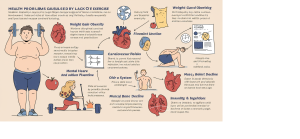
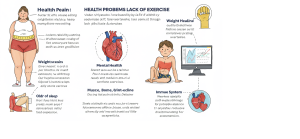
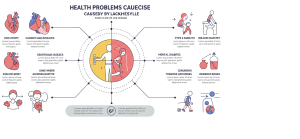
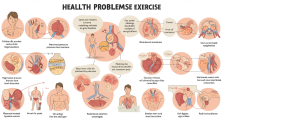
Without daily activity, calories are not burned efficiently and insulin sensitivity declines. This drives weight gain, abdominal fat, and higher blood sugar. Over time, the combination raises chances of type 2 diabetes and metabolic syndrome. Extra weight also loads the knees and spine, causing stiffness and pain that discourage further movement—a cycle that reinforces lack of exercise risks.
Lack of Exercise Risks for Heart Health
The heart is a muscle that needs regular work. Inactivity reduces stroke volume, elevates resting heart rate, and encourages plaque formation in arteries. Blood pressure tends to rise, and clot risk grows, pushing up the likelihood of heart attack and stroke. Even brisk walking for 20–30 minutes most days markedly improves circulation and lipid profiles.
Mental Health Consequences of Physical Inactivity
Exercise triggers endorphins and supports neurotransmitters involved in mood and focus. When activity falls, people report more stress, anxiety, low mood, and fragmented sleep. Daytime fatigue and brain fog follow, undermining work quality and motivation. Short movement “snacks”—like 5 minutes of stairs or mobility drills—restore energy and help break rumination loops.
Muscles, Bones, and Posture: The Cost of Inactivity
Under-used muscles atrophy, joints lose range, and bones shed density. This raises fall and fracture risk, especially in older adults. Two short strength sessions per week plus daily mobility keep shoulders, hips, and ankles functional and reduce back pain. Good posture and core stability also protect breathing efficiency and balance.
Immunity & Longevity: Why Daily Movement Matters
Regular activity lowers chronic inflammation and improves immune surveillance. Sedentary patterns correlate with more frequent infections and slower recovery. Population studies consistently link consistent activity with longer life expectancy, independent of weight loss. The safest plan is simple: walk more, lift something light but regularly, and stretch what feels tight.