

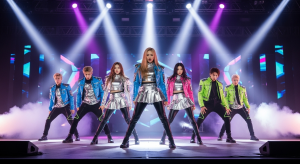
K-pop has become more than music — it’s a movement 🌍.
From Seoul’s neon-lit studios to the stages of Coachella, K-pop has reshaped the way the world consumes entertainment. Fans across continents sing along to Korean lyrics, memorize dance moves, and stream albums at record-breaking levels. But what exactly makes K-pop Global Dominance so powerful? Let’s take a deep dive into the beats, the business, and the hearts behind it all. 💫
🎤 The Birth of a Cultural Powerhouse Global Dominance of K-pop
In the late 1990s, Korea was rebuilding its identity in a rapidly globalizing world. The entertainment industry became a strategic weapon 🎯. Visionary producers like Lee Soo-man (SM Entertainment), Park Jin-young (JYP), and Yang Hyun-suk (YG) saw pop culture as export material — a bridge to introduce modern Korea to the world.
They created the idol training system, where young hopefuls trained for years in singing, dancing, language, and media manners. The result? A level of polish and professionalism that stunned global audiences. Every move, note, and camera glance was choreographed to perfection. ✨
📱 The Digital Revolution and Global Reach
When social media exploded in the 2010s, K-pop was ready.
YouTube broke borders. Twitter, TikTok, and Instagram made idols accessible.
Suddenly, a fan in Mexico City or Berlin could interact with a Korean artist in real time. 💬
Psy’s “Gangnam Style” (2012) didn’t just go viral — it rewrote the internet’s DNA. It proved that humor, rhythm, and joy could transcend language barriers. Following that, BTS, BLACKPINK, and EXO built global empires using digital-first strategies. Each teaser, concept photo, and dance challenge became a marketing weapon. 🚀
Fans weren’t just consumers — they were collaborators. They translated lyrics, edited fan videos, and even promoted comebacks better than record labels. This digital army fueled K-pop Global Dominance unlike anything seen before.
💪 The Trainee System: Discipline Meets Art
Every K-pop idol starts as a trainee. Some train for 10 years before debuting. The process is grueling — vocal lessons at dawn, dance until midnight, and constant performance evaluations. But it builds excellence. 💎
When these idols finally debut, they aren’t just singers — they’re multilingual performers, content creators, and role models. Their global adaptability (English, Japanese, Chinese skills) makes them perfect ambassadors. This unique system is one reason why K-pop maintains such consistent quality, no matter the group.
💖 Fandom Power: The Beating Heart of K-pop Global Dominance of K-pop
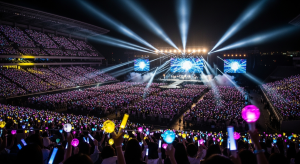
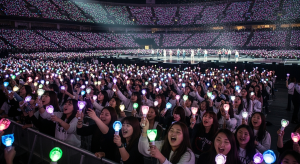
No K-pop article is complete without acknowledging its fandoms. 💜
From ARMY (BTS) to BLINK (BLACKPINK), ONCE (TWICE), and CARAT (SEVENTEEN) — these fans operate like well-organized communities.
They stream songs strategically, fundraise for birthdays, plant forests, and even make social impact campaigns. It’s not fandom — it’s digital activism. 🌱
The emotional connection between idol and fan is unmatched. Through platforms like Weverse and Bubble, idols share daily updates, jokes, and behind-the-scenes moments. That closeness turns admiration into loyalty — the real foundation of K-pop Global Dominance.
🎬 Visual Storytelling and Aesthetic Perfection
K-pop doesn’t release music videos — it releases cinematic universes. 🎥
Each group builds a unique concept: BTS’s “Love Yourself,” ATEEZ’s pirate saga, Aespa’s metaverse storyline. These interconnected visuals keep fans emotionally invested.
Even on stage, performances look like movie scenes. Costume design, lighting, and choreography merge into art. Every comeback feels like a film premiere — unpredictable, visually breathtaking, and emotionally charged.
🌐 The Business Behind the Music
K-pop is one of the most well-structured entertainment industries in the world.
Agencies control training, production, distribution, and global marketing in-house. This integration ensures both quality and brand consistency. 💼
Companies like HYBE (BTS), YG, SM, and JYP now operate globally. HYBE acquired Western labels, launching joint ventures with Universal Music and Geffen Records. That’s not just music — that’s empire-building. 👑
K-pop’s economic model includes physical albums (with collectible photocards), merchandise, concerts, brand deals, and digital platforms. Each idol is not just an artist — they’re a living brand.
🧠 Government Support and Cultural Strategy
The Korean government actively supports pop culture exports through initiatives like KOCCA (Korea Creative Content Agency). K-pop is soft power — a cultural ambassador promoting Korean tourism, fashion, and language. 🇰🇷
When BLACKPINK performs at Buckingham Palace or BTS speaks at the UN, it’s more than music. It’s diplomacy. The global image of Korea now shines through its artists.
🌈 Emotional Connection: The Secret Ingredient
Beyond all strategy, what truly sustains K-pop’s success is emotion. Fans see idols as mirrors of their own dreams and struggles.
Themes like self-love, identity, and resilience resonate deeply. 💫
When fans say K-pop saved them, they mean it. It’s more than music — it’s therapy, motivation, and belonging. In an age of isolation, K-pop built a digital family. That emotional heartbeat ensures fans don’t just listen — they stay.
🚀 The Future of K-pop Global Dominance
The next chapter of K-pop will merge art and technology even more.
Virtual idols, AI-driven production, and immersive metaverse concerts are already underway. Aespa’s avatar concept and SEVENTEEN’s real-time fan integration show how far innovation can go. 🤖
But amid this evolution, one truth remains: K-pop’s essence is human. It’s the shared heartbeat of artists and fans — synchronized across oceans. 🌍💞
K-pop isn’t slowing down — it’s rewriting the rulebook for the entire global music industry. And whether you’re in New York, London, or Seoul, one thing’s certain — K-pop isn’t just dominating; it’s redefining what dominance means. 🌟
https://raum.it.com/10-best-morning-exercises-for-a-healthy-start/
Leave a Reply